











Steering Participation: How Co-Steering is Shaping Europe’s Youth Participation Strategy
10 November 2025
Group photo
What does ‘youth participation’ really mean? Across Europe, the term has become central to youth policy, yet its meaning and practice have not always been clear. That question sparked the creation of the Youth Participation Strategy: a shared European framework to strengthen, define and guide how young people take part in shaping the Erasmus+ and European Solidarity Corps (ESC) programmes.
Dr. Dan Moxon, participation researcher and expert contributor to the strategy, explains that “Back when it was created, there were so many ways to interpret youth participation. We wanted to bring a common understanding of what it really means and go beyond vague ambitions.”
Building a Common Understanding
The Youth Participation Strategy, developed by SALTO Participation and Information (SALTO PI) in cooperation with the European Commission, National Agencies and other stakeholders, aims to make youth participation more consistent and meaningful across Europe. It defines participation as young people having ‘the right, the means, the space, the opportunity and, where necessary, the support’ to freely express their views, influence decisions and engage in democratic and civic life.
The strategy recognises two interlinked dimensions: (1) Youth voice and involvement in decision-making, and (2) Civic action and youth activism. The definition acknowledges that youth participation is grounded in young people’s human rights, can be individual or collective, and should reflect the diversity of young people’s experiences. It recognises youth as agents of change, with participation relating to power, agency and solidarity, encouraging decision-makers to listen to young people and their efforts to shape a more democratic, inclusive Europe.
Aligning with the EU Youth Strategy and its European Youth Goals, the Youth Participation Strategy sets measurable aims for National Agencies, youth organisations, researchers and SALTO Resource Centres.
Practising What It Preaches: The Steering Group
As Dr. Moxon puts it, “if we say good participation means involving young people in decision-making, then we have to involve them in how the strategy itself is developed and implemented.” That principle gave birth to the Youth Participation Strategy Steering Group.
The body includes six young people with diverse backgrounds selected through an open call, in a 50-50 split alongside stakeholders from National Agencies, the European Commission, SALTOs, the RAY Network and ERYICA. Members of the group rotate every two years.
Together, they review indicators, monitor progress, advise on actions, and advocate for the strategy’s implementation in their networks. Combining youth insight with institutional experience, the group identifies gaps, shares learning, and ensures the strategy stays rooted in young people’s realities and aligned with wider implementation structures.
Youth Power-Sharing
For its youth representatives, the Steering Group is a space to influence how participation itself is understood and supported within the programmes. “Having opportunities to stand up for our young voices, support the monitoring of the strategy and co-create meaningful events has been an inspiring journey,” says Hannah Schütt, one of the Steering Group’s incumbent youth representatives.
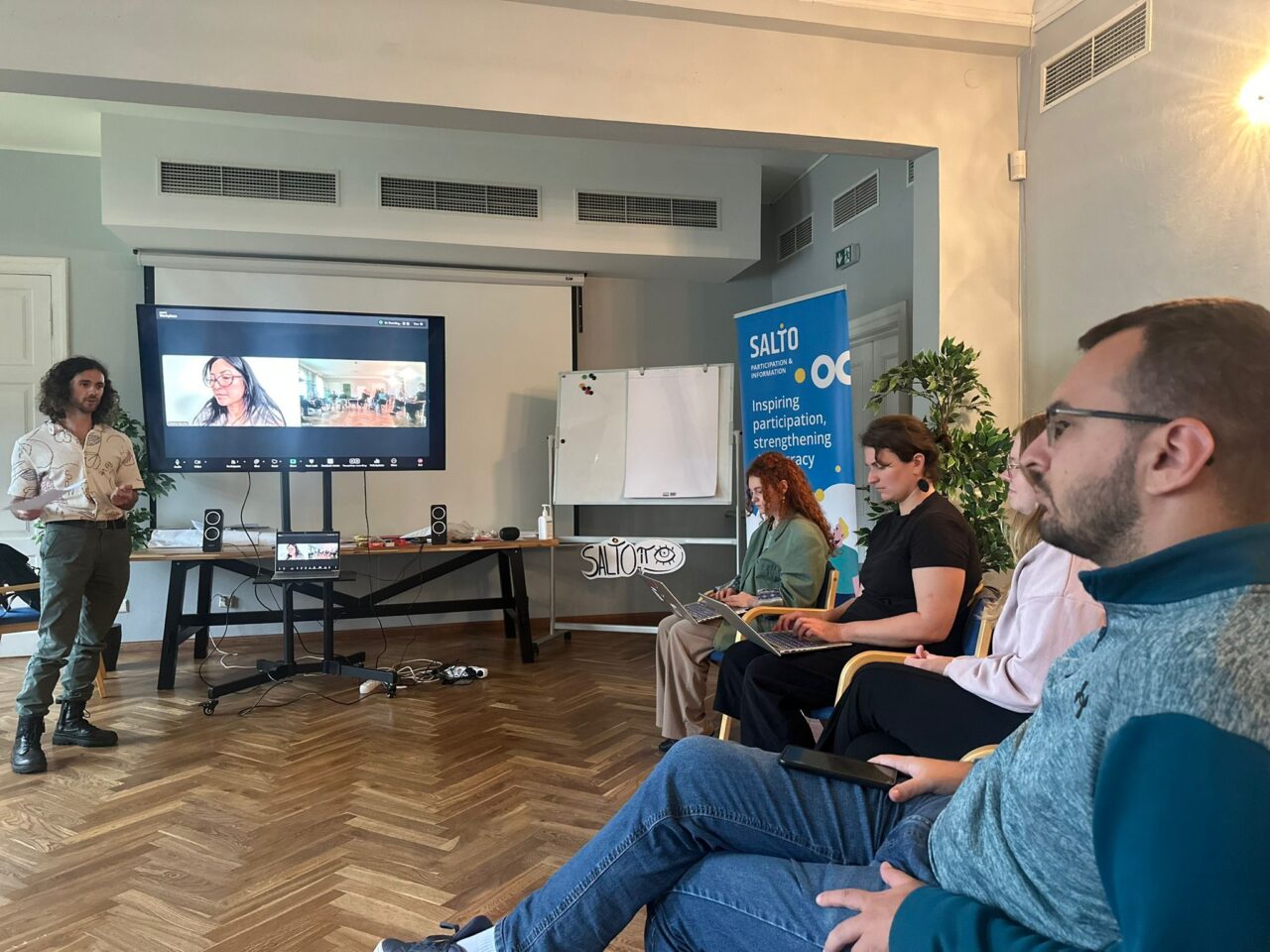
However, working in a co-steering structure takes time, trust and patience. Youth representative Gianluca Rossino acknowledges that “participatory and consultative processes aren’t easy to organise, but they show we’re doing our best to apply the ‘walk the talk’ principle in a safe and collaborative way.”
While this process hasn’t always been simple, the benefits brought by meaningful youth participation have been clear. As Brigita Medne, SALTO PI’s Youth Participation Coordinator puts it, “Building the work with Strategy together with young people and different stakeholders has been a challenge but also very exciting and meaningful. It has helped re-emphasise the importance of youth participation as a right, stated by the Strategy. By prioritising certain aims of the strategy, it has illustrated the importance of youth involvement in decision-making and democratic participation of young people with fewer opportunities that we will continue working on.”
Shared Decisions Bring Quality and Relevance
Co-steering is not only about democracy, it is also about quality and relevance. When young people take part in shaping programmes, they make them stronger, more accountable, and more connected to real needs. As Dr. Moxon explains, “It improves the programmes that we run, the policies we create, and the work that we do.”
Involving young people from diverse backgrounds as partners helps move from consultation to collaboration. It builds ownership, sparks innovation, and turns participation into shared responsibility. As youth representative Sara Porta puts it, “When young people with fewer opportunities are invited to the decision-making table, democracy comes alive with new energy, honesty and hope.”
Dr. Moxon highlights how tangible the youth representatives’ influence has been. He recalls how young members have repeatedly challenged assumptions, questioning why, for example, assessors and other programme actors have not been included in participation training, and pushing for more emphasis on promoting the EU Youth Goals.
The Value of Collective Progress Monitoring
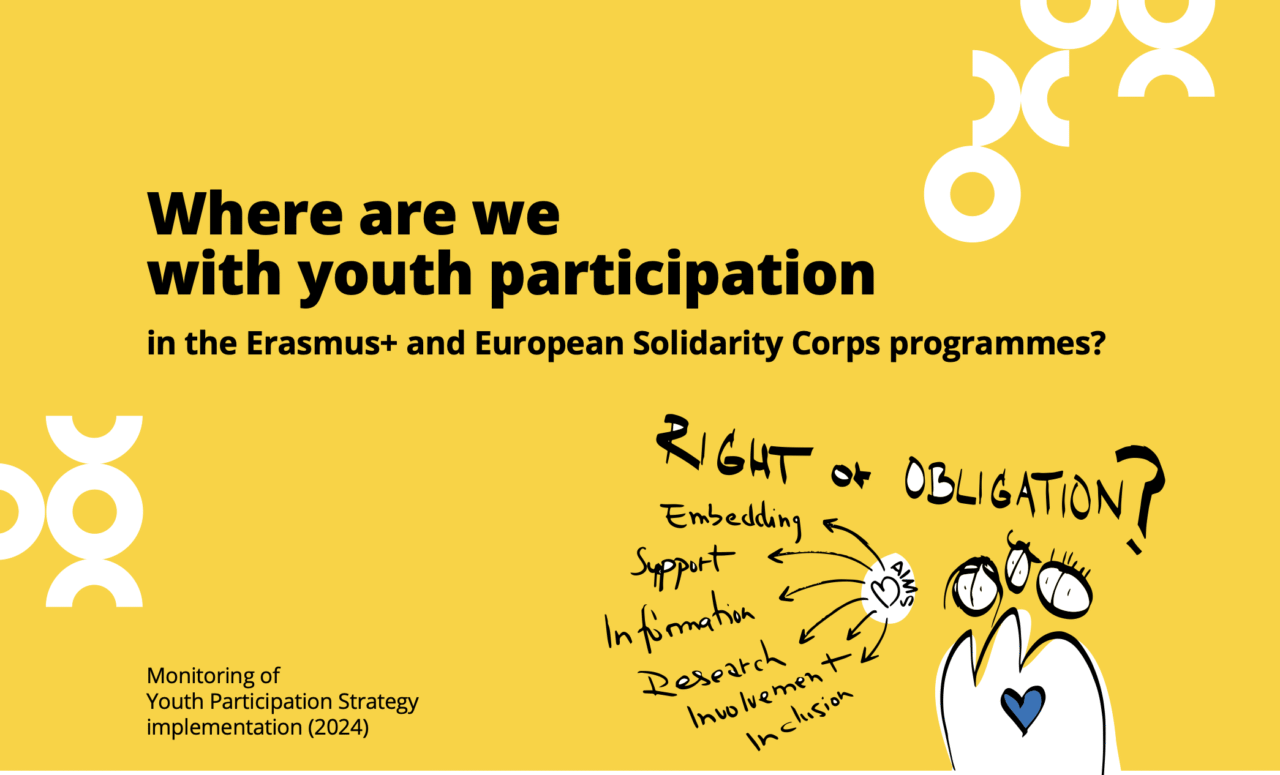
The commitment to collective oversight is reflected in the Steering Group’s most tangible output, the Monitoring Report. This process provides a snapshot of how participation is currently progressing across Erasmus+ and European Solidarity Corps programmes.
The latest report highlights major progress, but also points to areas where improvement is still needed, for example, on the topic of inclusive youth participation. As Dr. Moxon explains, “Inclusion and participation currently often sit in separate boxes. We’ve become good at each individually, but we need to form better connections between the two.”
Steering group members emphasise that the report isn’t for everyone to read cover to cover, but it’s vital for stakeholders’ strategic planning, accountability and learning. It helps SALTO PI, National Agencies and the European Commission see what’s working, where resources should shift, and where improvement is needed. For youth organisations and participation advocates, it offers evidence to strengthen their case for change.
A Progress Temperature Check
The Steering Group’s Monitoring Report highlighted promising progress across Europe progress, but with key areas still needing attention. Here are some highlights from the report:
Good progress
- National coordination. Most National Agencies now have a designated contact person for the ‘Participation in democratic life’ Erasmus+ priority, helping strengthen cooperation and knowledge-sharing across Europe.
- Tools, resources and training. The Participation Resource Pool has evolved into a Europe-wide hub for training, tools and examples of practice, with engagement in training increasing.
Partial progress
- Improved quality guidance. More guidance on meaningful participation has been made available, but some stakeholders’ understanding remains limited and there are gaps in existing guidance. In response to the recommendation, SALTO PI and the steering group have been working on elaborating the definition and standards on meaningful participation to be published in 2025.
- Link to Youth Goals. Programmes directly linking to the Youth Goals are more common, but they remain secondary rather than central to most projects.
Limited or no progress
- Involvement in programme decisions. Only around a quarter of National Agencies currently involve young people directly in programme decision-making, and half have no current plans to do so. This has been a long-term focus for SALTO PI and SNAC ‘New Power in Youth’, resulting in inspirational stories and participatory research. Future plans to address this include a meeting of young people involved in National Agencies, new practice examples, and tailored support for National Agencies.
- Inclusion and equal access. Young people with fewer opportunities remain underrepresented, accounting for around 10% of participants in participation-focused projects. As a result, there will be targeted action through research on barriers to democratic participation, and related learning activities planned for 2026.
Read the full Monitoring Report for a full understanding of progress across all areas of the strategy, and to identify how your own work can support the delivery of as yet unimplemented aims.
A Model to Inspire
SALTO PI hopes that the Steering Group can act as a model to inspire other Erasmus+ and European Solidarity Corps stakeholders in how they approach participation, particularly in relation to young people’s involvement in programme management.
Over time, the group has evolved and SALTO PI is constantly learning from its experience. One area of learning has been the group’s composition and purpose. “While its primary purpose is to act as a co-steering body, it has at times functioned more like an advisory board, as institutional representation hasn’t always been at senior level,” Dr. Moxon explains. This has identified a need for higher level engagement in future, ideally involving National Agency directors and decision-makers who can ensure follow-through on a wider scale.
The Steering Group’s experience shows that progress towards meaningful youth participation doesn’t have to happen all at once, but that over time, shared power can transform organisational culture when it’s backed by structure, trust, and commitment.
As Carmen Teubl-Kiviniemi, RAY network representative on the Steering Group, puts it: “For the past two years, young people from different backgrounds and representatives of various institutions have been working together at the same table — discussing, planning, carrying out activities and monitoring the Youth Participation Strategy. This experience was, and still is, a true example of lived democracy.”
Learn more
Youth Participation Strategy
participationpool.euSteering Group of the Youth Participation Strategy
participationpool.eu2025 Monitoring Report
participationpool.euSharing the Power: The German National Agency Experience
participationpool.euNew research by NpiY explores youth involvement in decision-making
participationpool.eu